
Project Background:
In contemporary society, traditional culture, especially religious art with deep heritage, faces the challenge of connecting with the younger generation. Green Tara, as an embodiment of compassion and protection in Tibetan Buddhism, has a solemn and sacred image. However, the core direction for the ZODORI brand’s “Childhood Dream Series” was to explore how this profound cultural connotation could be made more accessible, approachable, and appealing to modern aesthetics, allowing it to be embraced and loved by the public.
Solution & Design Philosophy:
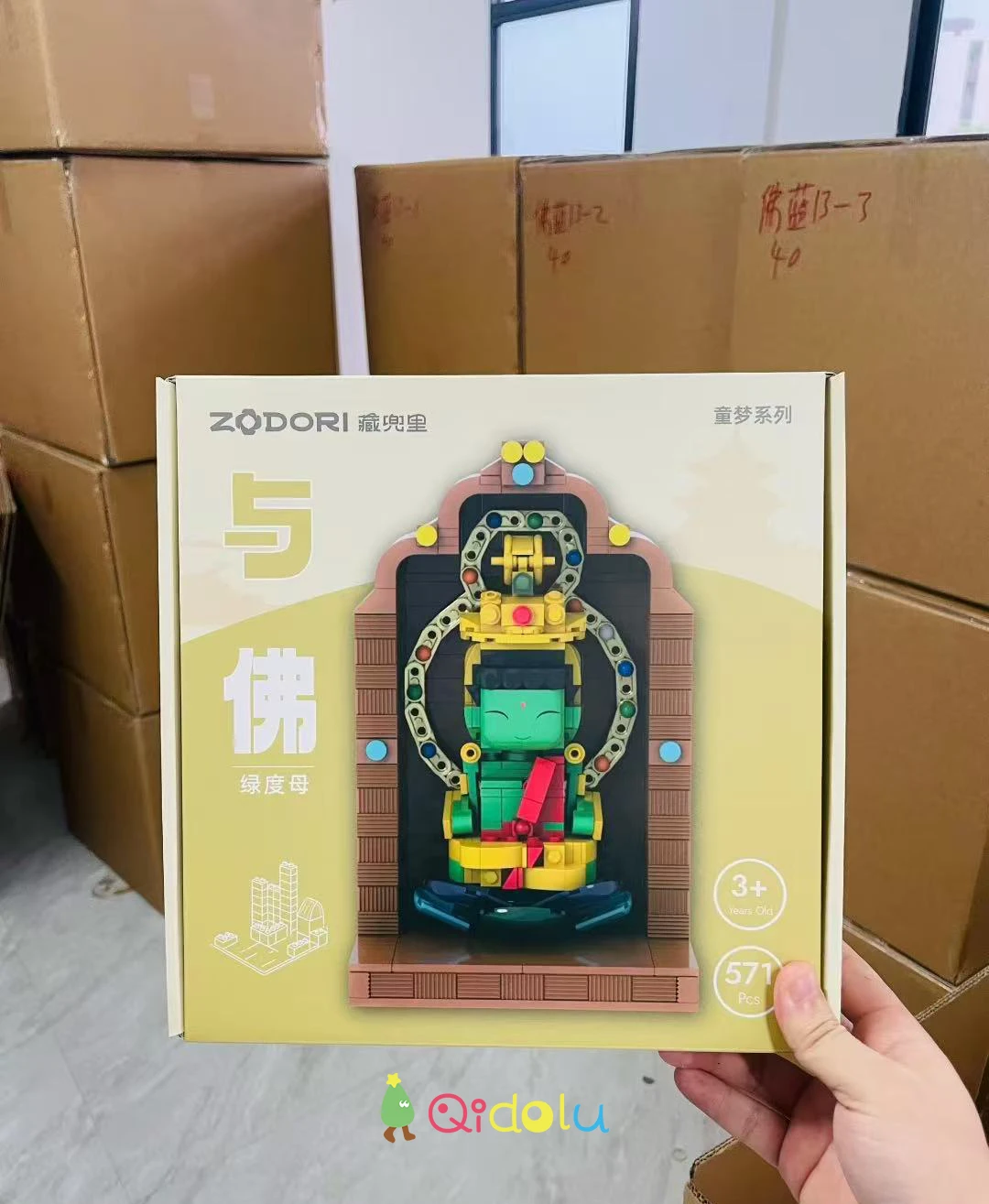
The “Green Tara Buddha Mother” building block set we created for the ZODORI brand aims to break the solemnity of traditional Buddhist art. Using a trendy, “Q-style” cute−version design language, we’ve reshaped a cultural symbol into something approachable, buildable, and portable enough to be “tucked in a pocket” (the meaning of ZODORI’s Chinese name, 藏兜里).
-
Artistic Re-creation in a “Chibi” Style: We deliberately moved away from a realistic replica of the traditional statue and boldly reinterpreted it in a cute, “Q-style.” With 571 pieces, we distilled and “cutified” all of Green Tara’s classic elements: her green-hued body, compassionate face, jeweled crown, necklaces, and lotus posture. The figure has a gentle smile and slightly closed eyes, creating a healing and adorable expression that significantly closes the psychological distance with the user.
-
A Brilliant Fusion of Modern Aesthetics and Traditional Elements: The product’s color palette retains Green Tara’s signature green while incorporating highly saturated, trendy colors like red, yellow, and blue, making the overall visual effect vibrant and contemporary. The shrine-like backdrop design not only provides a dignified stage for the figure but also adds layers and fun through the block medium. The entire piece looks like a stylish art object for any desk.
-
An Interactive Experience of “Building as Meditation”: We believe the assembly process itself is an experience of focus and mindfulness. As users combine the 571 pieces to form the sacred figure, they can temporarily detach from external distractions and concentrate on the creation at hand. We’ve imbued this process with a sense of “light, modern-day spiritual practice.” The sense of accomplishment upon completion, combined with the spiritual comfort offered by the Green Tara figure, provides a dual-value experience.
Core Application Value:
-
Pioneering a New Niche in Trendy Cultural Products: This product successfully merges traditional religious themes with a trendy toy medium, opening up a brand-new market segment. It is no longer a niche religious item but a fashionable cultural and creative product with spiritual depth, aimed at a broad audience of young consumers.
-
A Cultural “It-Item” for Gen Z: The cute design, healing aesthetic, and fun building experience perfectly align with the consumer preferences of Generation Z. Its “high-visual appeal” and “strong interactivity” give it immense viral potential on social media, effectively encouraging young people to proactively learn about the cultural story behind it, achieving a form of cultural “reverse-seeding.”
-
An Innovative Vehicle for Emotional Comfort: In today’s fast-paced modern life, the need for spiritual and emotional comfort is growing. This Green Tara building block set offers a novel way to find solace. It can serve as a gift to wish for peace and wisdom, or as a personal “spiritual charging station” on one’s desk, providing tranquility and strength in daily life.
Project Summary:
The ZODORI “Green Tara Buddha Mother” building block project is a bold and successful innovation by our company in the direction of “making traditional culture youthful and trendy.” We have demonstrated that even solemn and sacred religious culture can be transformed into a popular, trendy item beloved by young people through clever and creative design. This case not only establishes a distinct market identity for the ZODORI brand but also provides a highly inspiring model for the modern inheritance and commercial transformation of traditional culture.